
Home / FAQ
FAQ
Insulation FAQ: Answers From a Local Contractor
Straight answers about spray foam, blown-in and fiberglass insulation, costs, R-values and scheduling in Central Texas. Don’t see your question? Call (979) 242-3976.
- Free estimates in La Grange
- BBB Accredited
- 62 Google reviews
25 answers
Still unsure? Call (979) 242-3976
General
General insulation questions.
Don’t see your question? Call us at (979) 242-3976.
How can I tell if my house is poorly insulated?
Rooms that never cool down in summer, an upstairs that runs much hotter than downstairs, warm ceilings and high electric bills from June to September are common signs. If you can see the tops of your ceiling joists in the attic, you almost certainly need more insulation.
How much insulation does a Central Texas attic need?
The U.S. Department of Energy recommends R-49 to R-60 for attics in Climate Zone 2, which includes La Grange and the surrounding area. For blown-in fiberglass, that’s roughly 16 to 20 inches.
Spray foam or blown-in: which is better?
Blown-in is usually the most cost-effective way to add insulation to an existing attic floor. Spray foam costs more but also seals air leaks, making it a strong choice for rooflines, pier-and-beam floors and metal buildings.
What's the cheapest way to insulate a wall?
For open stud walls, fiberglass batts are usually the lowest cost. For finished walls in older homes, blown-in cellulose can often be installed without removing drywall.
How much does it cost to insulate 1,000 square feet?
It depends on the material, the depth needed and how accessible the space is. We give free written estimates so you know the exact price before any work begins.
Spray Foam Insulation
Spray Foam Insulation questions.
Don’t see your question? Call us at (979) 242-3976.
Is spray foam worth it in Central Texas?
For many homes, yes, especially when the AC unit and ductwork sit in the attic. Sealing the roofline keeps that equipment out of 140°F air. For a simple attic floor with no equipment, blown-in insulation is often the better value, and we’ll tell you so.
Do I need to leave the house while you spray?
Yes, for a short time. Spray foam needs time to cure and ventilate. We’ll tell you exactly how long to stay out based on the product we use, typically about a day.
Can you spray foam under my pier-and-beam house?
Yes. Closed-cell foam sprayed to the underside of the floor stops cold drafts in winter and humid air in summer, and it won’t sag or fall down like batts can.
Will spray foam cause moisture problems?
Not when it’s installed correctly. We choose open- or closed-cell based on where it’s going and make sure attics and HVAC are set up properly for a sealed space.
Blown-In Insulation
Blown-In Insulation questions.
Don’t see your question? Call us at (979) 242-3976.
How deep should my attic insulation be?
For R-49, roughly 17 to 20 inches of blown fiberglass or 13 to 15 inches of cellulose. We’ll measure what you have and tell you exactly how much to add.
Do you have to remove my old insulation first?
Usually not. If it’s dry and clean, we blow new insulation right on top. We only recommend removal if it’s wet, moldy or contaminated by rodents.
How long does a blown-in job take?
Most homes are finished in a few hours to one day, depending on attic size and access.
Will blown-in insulation settle?
All loose fill settles slightly over time. We install to the settled depth needed, so you still have your target R-value years from now.
Fiberglass Insulation
Fiberglass Insulation questions.
Don’t see your question? Call us at (979) 242-3976.
Batts or blown-in: which should I choose?
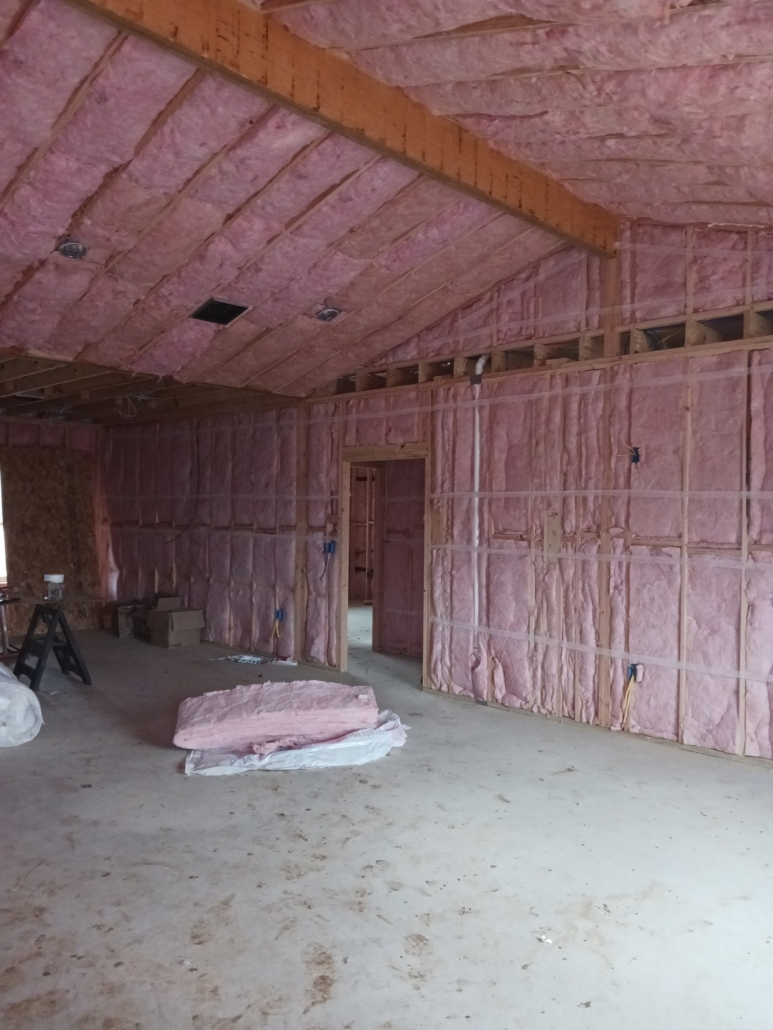
Batts are best for open walls and floors in new construction or remodels. For existing attics, blown-in usually gives better coverage for the money.
Can you add batts to finished walls?
Not without removing drywall. For closed walls in older homes, dense-packed blown-in cellulose is usually the better option.
Kraft-faced or unfaced?
Kraft-faced batts include a vapor retarder and are typically used in exterior walls. Unfaced batts go where a vapor retarder isn’t needed, like interior walls or over existing insulation.
Do batts help with noise?
Yes. Batts in interior walls and between floors noticeably reduce sound between rooms.
Commercial Insulation
Commercial Insulation questions.
Don’t see your question? Call us at (979) 242-3976.
Do you work with builders and general contractors?
Yes. We regularly coordinate with builders on new homes and additions and can provide quotes from plans.
How do you stop condensation in a metal building?
Closed-cell spray foam applied directly to the metal keeps warm, humid air from reaching the cold surface, which is what causes dripping.
How far out do you schedule commercial work?
It depends on the season and the size of the job. Call us early in your project and we’ll fit into your build schedule.
Can you insulate an occupied business?
Yes. We’ll work around your hours to keep disruption to a minimum.
Service area
Service area and scheduling.
Don’t see your question? Call us at (979) 242-3976.
Which towns do you serve?
La Grange, Bastrop, Brenham, Columbus, Giddings, Hallettsville and Lockhart, plus nearby communities such as Weimar, Schulenburg and Bellville.
Do you charge to travel outside La Grange?
No. Estimates are free throughout our service area.
What services are available in every town?
Spray foam, blown-in (loose-fill), fiberglass batt and commercial or new-construction insulation.
My town isn't listed. Can you still help?
Probably. Call (979) 242-3976 and we’ll tell you if we can get to you.
Still have a question? Ask us, it's free.
Contact us
Get your free insulation estimate.
Call, email or send the form. We’ll get back to you to set up a time to look at your project.
(979) 242-3976
Phone
insulationserviceslg@gmail.com
730 E Colorado St #300, La Grange, TX 78945
Office
Request an estimate
We only use your information to respond to this request. Free estimates, no obligation.