
Insulation guide
Spray Foam vs. Blown-In vs. Fiberglass Insulation
Short answer: for most Central Texas attics, blown-in insulation topped up to R-49 is the best value. Spray foam costs more, but it seals air leaks and is the right call for metal buildings, crawlspaces and sealed attics. Fiberglass batts are the budget choice for open walls and floors in new construction and remodels.
- Written by a La Grange insulation installer
- Free on-site estimates
- BBB Accredited, 62 Google reviews
Not sure which one you need?
Leonard will check your attic or building for free.
Quick answer
Which insulation should you choose?
Match the material to the job. This is what we recommend most often around La Grange.
Existing attic with thin or settled insulation
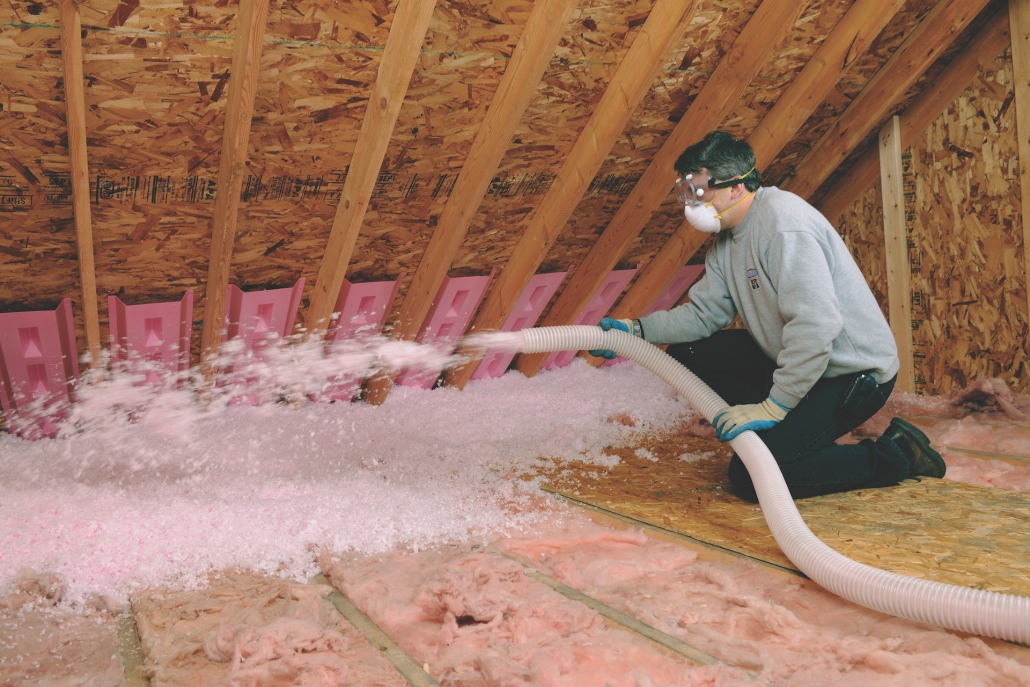
Blown-in insulation, topped up to R-49. It fills around joists and wiring, goes over what you already have, and most attics are done in one visit.
Metal building, shop or barn
Closed-cell spray foam. It sticks to the metal, adds strength and stops the condensation that drips and rusts uninsulated steel.
Crawlspace or pier-and-beam floor
Closed-cell spray foam on the underside of the floor. It resists moisture and blocks drafts coming up through the floor.
New construction or open walls
Fiberglass batts for the lowest cost, or open-cell spray foam for a tighter, quieter house with lower cooling bills.
Ductwork or AC unit in the attic
Open-cell spray foam on the underside of the roof deck. It turns the attic into a sealed, semi-conditioned space so your ducts are not sitting in 140°F heat.
Shop, warehouse or commercial building
Usually spray foam or batts, depending on the structure and budget. See our commercial insulation page.
Side by side
How the three types compare
Typical numbers for each material. Actual R-value depends on thickness and how well it is installed.
Spray foam
Liquid foam that expands to fill and seal every gap.
- R-value: about R-3.5 to R-3.8 per inch (open-cell) and R-6 to R-7 per inch (closed-cell)
- Air sealing: yes, seals leaks as it insulates
- Moisture: closed-cell acts as a vapor barrier
- Cost: highest of the three
- Best for: metal buildings, crawlspaces, roof decks, new walls
Blown-in (loose-fill)
Loose fiberglass or cellulose blown into the attic with a machine.
- R-value: about R-2.2 to R-2.7 per inch (fiberglass) and R-3.2 to R-3.8 per inch (cellulose)
- Air sealing: limited, so seal gaps first
- Moisture: keep it dry, it is not a vapor barrier
- Cost: lowest cost per R-value
- Best for: topping up existing attics
Fiberglass batts
Pre-cut blankets that fit between studs, joists and rafters.
- R-value: about R-2.9 to R-3.8 per inch (R-13 to R-15 in 2x4 walls, R-19 to R-21 in 2x6 walls)
- Air sealing: no, gaps must be sealed separately
- Moisture: available with a kraft-paper facing
- Cost: low
- Best for: open walls, floors, new construction and additions
Attic R-value
How much attic insulation does a Texas home need?
R-49 is the target for attics in La Grange and most of Central Texas. That is about 18 to 20 inches of blown-in fiberglass or about 14 inches of cellulose.
Central Texas is in energy climate zone 2. The U.S. Department of Energy recommends R-30 to R-60 for attics here, and the 2021 International Energy Conservation Code calls for R-49 in new homes. Many older homes in Fayette County have only R-11 to R-19, which is just 4 to 7 inches.
Quick check: measure the depth of your attic insulation with a ruler. Under about 12 inches, a top-up will usually pay off in lower summer cooling bills.
Spray foam types
Open-cell or closed-cell spray foam?
Open-cell foam is soft and spongy, costs less, blocks sound well, and is the usual choice for roof decks and interior walls.
Closed-cell foam is dense and rigid. It has nearly twice the R-value per inch, blocks moisture, and adds strength. That makes it the choice for metal buildings, crawlspaces and anywhere water or condensation is a concern.
FAQ
Insulation type questions, answered.
Still not sure? Call (979) 242-3976 and ask Leonard.
Is spray foam insulation worth it in Texas?
Often, yes, for metal buildings, crawlspaces and homes with ductwork in the attic, because it stops air leaks as well as heat. For a standard vented attic, blown-in insulation to R-49 usually gives a faster payback for less money.
Can you add blown-in insulation on top of old insulation?
Yes, as long as the old insulation is dry and free of mold or rodent damage. We check it during the free estimate and only recommend removal when it is needed.
What is the best insulation for a metal building?
Closed-cell spray foam. It bonds to the steel, insulates and stops condensation in a single layer.
How long does it take to insulate an attic?
Most blown-in attic top-ups are finished in one visit. Spray foam and whole-house jobs take longer, and we give you a timeline with your estimate.
How do I know which insulation my home needs?
Book a free on-site estimate. Leonard checks what you have now, measures it and recommends the material that fits your home and budget.
62 Google reviews
From local homeowners

BBB Accredited
Austin-area BBB
Free estimates
Written and no pressure
Homes & businesses
Residential, commercial, industrial
Talk to Leonard about your project.
Contact us
Get your free insulation estimate.
Call, email or send the form. We’ll get back to you to set up a time to look at your project.
(979) 242-3976
Phone
insulationserviceslg@gmail.com
730 E Colorado St #300, La Grange, TX 78945
Office
Request an estimate
We only use your information to respond to this request. Free estimates, no obligation.